


The Truth About Pet Dental Products: What Actually Prevents Disease
Dental disease often develops silently between veterinary visits. Bacteria in the mouth form sticky plaque, which hardens into tartar and irritates the gums. While professional cleanings are essential for removing buildup, plaque can return quickly without regular home care. The key is knowing which habits and products truly make a difference and are worth your time and effort.
Palm City Animal Medical Center takes an evidence-based approach to home dental care. Not all products deliver results, and we help you sort options during wellness visits. Through our comprehensive dental services, we tailor home care to your pet and your routine. Brushing is best, but wipes, enzymatic gels, and select chews can help when brushing isn’t realistic. Our goal is a plan you’ll actually maintain. Contact our team to find home care that fits your life.
Starting a Dental Routine Your Pet Will Actually Tolerate
Wondering which products work, how often to use them, or how to get your pet to cooperate? You’re not alone. Shelves are crowded with brushes, wipes, gels, chews, and water additives that all promise results.
Here’s the simple truth: consistent home care plus regular professional cleanings helps prevent painful disease. Small daily efforts add up, keeping your pet comfortable and lowering the need for procedures.
At each visit, we check gum health, tartar, and teeth. We then recommend practical routines based on your pet’s breed, current dental status, and your household. The best plan is the one you can do consistently.
How Plaque Becomes a Serious Health Problem
Plaque is a film of bacteria that forms on teeth within hours of eating. If it’s not removed, it hardens into tartar and creeps under the gumline. Gums become red, swollen, and may bleed.
Without treatment, inflammation leads to periodontal disease, which damages bone and tissues that support teeth. Pets can lose teeth, develop jaw pain, and hide discomfort surprisingly well.
Bacteria can also enter the bloodstream and affect the heart, kidneys, and liver. While professional dental cleanings address existing buildup, daily home care helps stop the cycle from restarting.
Why Brushing Still Beats Everything Else
Brushing physically breaks up plaque before it turns into tartar. Bristles reach the gumline where disease starts. Daily brushing is best, but even every other day helps.
Focus on consistency over perfection. Getting the outer surfaces of the back teeth and canines is more important than a full mouth clean. Even partial brushing makes a difference. When brushing your dog’s teeth, gentle circles or short strokes both work. Do what your pet tolerates.
How to Build Tolerance
Go slow. First, touch your pet’s muzzle and lift the lip for a second, then reward. Next, touch their teeth with your finger, and after a few days, add a pet-safe toothpaste. Never use human toothpaste.
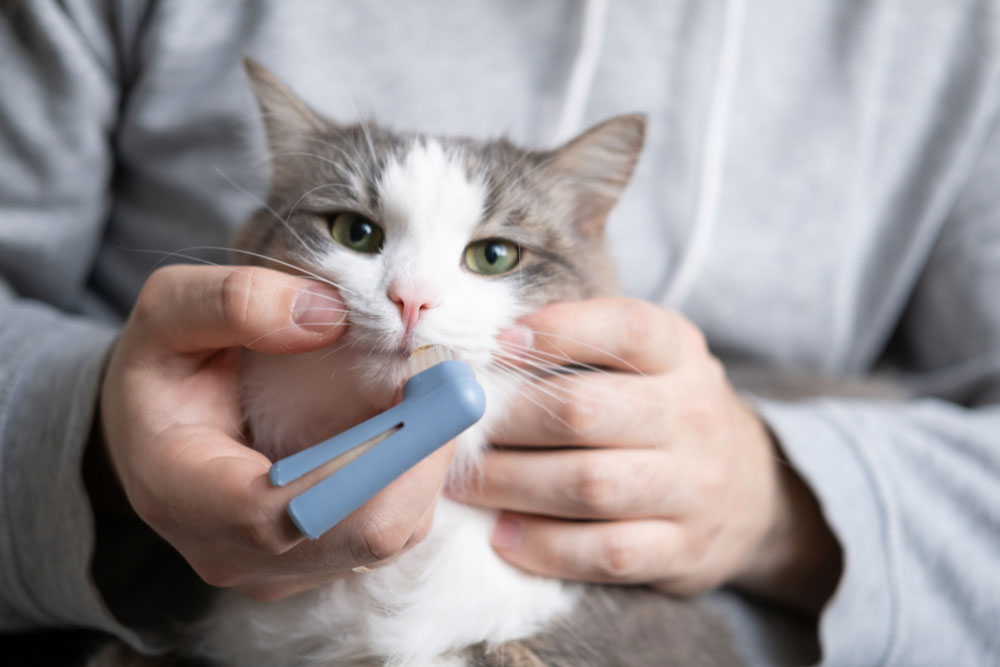
Try a soft brush, finger brush, or gauze on your finger. Keep early sessions to 30 seconds and build gradually. Cooperative care techniques help make handling more positive and reduce stress for both you and your pet.
We’re happy to demonstrate brushing and help you work around head-shy pets or tricky back teeth during dental consults.
When Wipes and Gauze Make Sense
Some pets simply won’t accept a brush. Dental wipes or gauze can help remove surface plaque, especially on the front and outer teeth. Cats and anxious dogs often tolerate wiping better than bristles.
Wipes aren’t perfect for the back molars, but they’re better than skipping home care. Many wipes include enzymes for extra plaque control. If plaque builds quickly or gums are inflamed, you’ll likely need more than wipes alone. We can help you decide what’s enough for your pet.
How Enzymatic Gels Support Oral Health
Enzymatic gels and pastes break down plaque using enzymes. They can help even if you don’t brush, though brushing plus gel works best. Apply with a finger, brush, or place on a treat so it contacts the teeth and gums.
These products are convenient, require no rinsing, and can make a noticeable difference when used consistently. Look for formulas with proven enzymes. Keep expectations realistic: gels can slow plaque but won’t remove tartar or fix active gum disease.
Do water additives and rinses actually work?
Water additives and rinses deliver antimicrobial or enzymatic ingredients across the mouth. Some help reduce plaque, but results vary widely by product. They’re best as add-ons to brushing or wiping.
Start with small amounts and watch your pet’s drinking habits. If your pet avoids the water, the product won’t help. VOHC-accepted products ensure claims are verified and meet standards for plaque and tartar reduction.
Rinses applied directly to teeth can be more effective than water additives but require handling. They’re useful for pets who won’t accept brushing yet need more than additives alone.
If your pet already has visible tartar or sore gums, schedule a cleaning first. Additives can’t treat established disease.
Choosing Dental Chews That Actually Help
Chewing can scrape away soft plaque, especially on the back teeth. But not all chews are safe or effective.
Dangerous chew items like bones, antlers, hooves, and hard nylon can crack teeth. If your fingernail can’t dent it, it’s too hard.
Choose safe chew toys and VOHC-accepted chews that bend slightly and encourage steady gnawing. Textured rubber and approved dental chew toys are good options.
Match Chews to Your Pet
Pick the right size to prevent choking and ensure comfortable chewing. Rotate shapes and textures to keep interest and reach more surfaces. Watch for stomach upset with edible chews and adjust if needed.
We can recommend chews based on your pet’s size, chewing style, and dental history during wellness exams.

What Home Care Cannot Fix
Once plaque hardens into tartar, brushing, wipes, gels, and chews can’t remove it. Tartar and disease below the gumline require a professional cleaning under anesthesia.
Anesthesia allows cleaning under the gums, dental X-rays, and treatment of hidden issues. This keeps pets still and comfortable so we can fully assess and treat disease. At Palm City Animal Medical Center, our team has specialized expertise in dentistry, and our advanced dental services include professional cleaning with ultrasound equipment, fluoride treatments, and even root canals and caps when needed.
Anesthesia-free pet dentals only clean visible surfaces, miss disease under the gums, and can create fear without solving the real problem. Proper anesthesia with monitoring is the safest way to truly treat dental disease.
How often does your pet need a professional cleaning? It depends on breed, age, current dental status, and how consistent home care is. Some pets need annual cleanings; others can go longer. We’ll guide you based on your pet’s progress.
Making Dental Care a Sustainable Habit
Attach dental care to a routine you already have. Try brushing after dinner, before bed, or with morning coffee. Consistency matters more than timing.
Start small. Three times a week is a great beginning and often more sustainable than aiming for daily right away. Reward your pet and celebrate small wins, like 15 seconds of brushing without fuss.
Share the job. When everyone in the household helps, it happens more often. Older kids can assist with wipes or gel under supervision.
Watch for signs your pet needs a professional check: ongoing bad breath, visible tartar, red or bleeding gums, pawing at the mouth, or avoiding crunchy food. These signs mean it’s time to schedule a dental exam.
We’re here to troubleshoot challenges, demo techniques, and update product suggestions as your pet and lifestyle change. Check out our online pharmacy to find dental products that veterinary professionals trust- we’re happy to make recommendations!
FAQ: Common Pet Dental Care Questions Answered
What’s the single best thing I can do at home?
Brush the outer surfaces of the back teeth and canines daily or every other day. Even a quick 30 seconds helps.
Are wipes, gels, and water additives enough without brushing?
They can help, but brushing is most effective. If brushing isn’t possible, combine wipes or gels with VOHC-accepted chews and consider a rinse.
How do I pick a safe chew?
Use the fingernail test. If you can’t dent it, skip it. Look for VOHC acceptance and choose the right size for your pet.
When should my pet get a professional cleaning?
If you see tartar, red gums, bad breath, or discomfort while eating, book a cleaning. Many pets benefit from annual cleanings.
Is anesthesia really necessary?
Yes. It’s the only way to clean under the gums, take X-rays, and treat hidden disease safely and thoroughly. Anesthesia-free cleanings don’t address the real problem.
Your Partner in Lifelong Dental Health
Every brush, wipe, gel, and safe chew helps prevent pain and disease. The combination of regular home care and professional cleanings has the biggest impact on comfort and long-term health.
Palm City Animal Medical Center provides the professional foundation for success. Our dental services treat existing issues and guide you on maintenance between visits. We’ll help you choose products, demonstrate techniques, and adjust your plan as needed. Ready to protect your pet’s smile? Schedule a dental consultation or contact us today to build a simple home care routine that truly works.




Leave A Comment